Lalibela is unlike anywhere else on Earth. This small highland town contains one of humanity's most extraordinary achievements — 11 medieval rock-hewn churches carved directly into living rock over 800 years ago. Here's everything you need to know before you visit.
Quick Facts About Lalibela
- Location: Amhara Region, northern Ethiopia
- Altitude: 2,630 meters (8,628 feet)
- Best time to visit: October to March (dry season)
- How to get there: Daily flights from Addis Ababa (45 minutes)
- Recommended stay: 2–3 days minimum
- Church entrance fee: $50 USD (valid for all 11 churches, 5 days)
Top 10 Things to Do in Lalibela
Visit the Northern Church Cluster
The northern cluster is the heart of Lalibela and the first stop for most visitors. It contains seven of the eleven rock-hewn churches, all connected by tunnels and trenches carved into the red volcanic rock.
The crown jewel is Bete Medhane Alem — the largest rock-hewn church in the world, supported by 72 pillars and believed to house a replica of the Ark of the Covenant. Nearby, Bete Maryam is the oldest church in the complex and features remarkably preserved 12th-century frescoes.
Arrive early (7–8am) to experience morning Mass when white-robed priests chant ancient Ge'ez prayers. The atmosphere is deeply moving and unlike anything you'll witness elsewhere.
See Bete Giyorgis — Ethiopia's Most Iconic Church
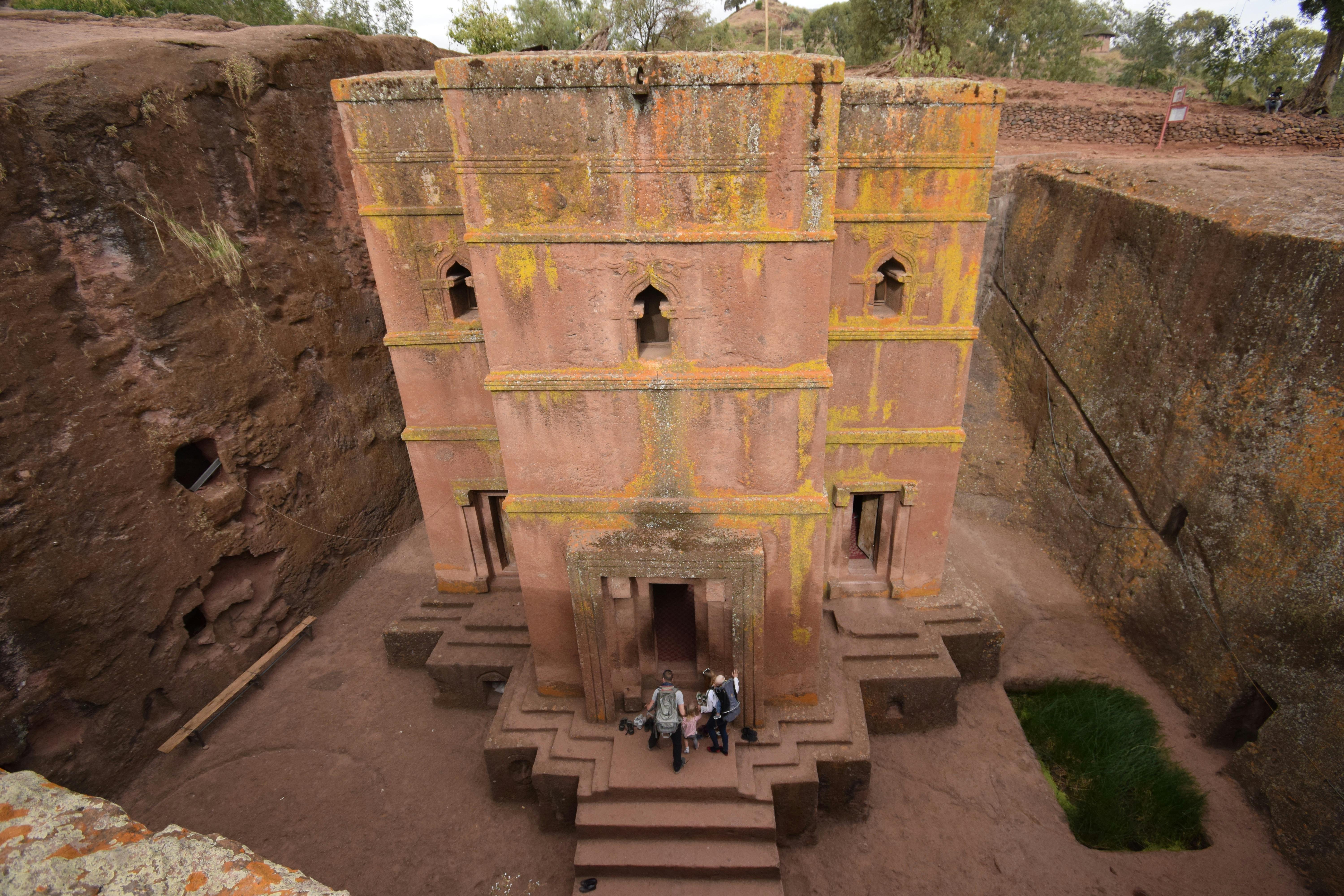
No visit to Lalibela is complete without seeing Bete Giyorgis (House of Saint George) — and no photograph does it justice. This perfectly cruciform church is carved 12 meters deep into the earth, accessed by a narrow rock-cut trench, and stands completely isolated on all four sides.
Built by King Lalibela as the last of the 11 churches, legend says it was constructed with the help of angels. The roof features a triple cross pattern carved in relief, and the interior contains original 12th-century paintings.
Visit Bete Giyorgis at sunset — the golden light on the red rock is spectacular and crowds are thinner in the late afternoon.
Attend the Timkat Festival (If Visiting in January)
If your visit coincides with Timkat (Ethiopian Epiphany, celebrated January 19th or 20th), consider yourself extraordinarily lucky. Timkat is Ethiopia's most colorful religious festival, commemorating the baptism of Jesus.
In Lalibela, thousands of white-robed pilgrims process through the rock-cut trenches bearing replica arks of the covenant, accompanied by priests in golden vestments, drums, and ancient liturgical chanting. It is one of the most extraordinary spectacles in Africa.
Book accommodation 6+ months in advance if visiting during Timkat. Hotels fill up completely.
Explore the Southeastern Church Cluster
Less visited than the northern cluster, the southeastern group contains four churches connected by tunnels. This cluster tends to be quieter and gives you a more intimate experience with fewer crowds.
Bete Amanuel is considered by many experts to be the finest and most precisely carved of all the Lalibela churches, with walls featuring alternating layers of protruding and recessed stone in a style that mirrors ancient Aksumite architecture.
Hike to Ashetan Maryam Church
For breathtaking panoramic views over Lalibela and the surrounding highlands, hike up to Ashetan Maryam — a cliff-face church carved into a mountain above the town. The hike takes about 1.5–2 hours on foot, or 30 minutes by mule (arranged in town).
At the top you'll find a functioning church still used by the local community, with monks who have lived here for decades. The views stretch across the Lasta Mountains for over 100 kilometers on a clear day.
Start the hike early morning to avoid the midday heat and catch the best light for photography.
Participate in a Traditional Coffee Ceremony
Ethiopia is the birthplace of coffee, and the traditional coffee ceremony is not to be missed. Green beans are roasted over charcoal, ground by hand, and brewed in a clay pot called a jebena. The ceremony is served in three rounds and lasts 45–60 minutes, accompanied by incense and popcorn.
Ask your guide to arrange a home ceremony with a local family rather than a tourist cafe for a more authentic experience.
Visit the Lalibela Saturday Market
Lalibela's weekly market is a wonderful window into rural highland life. Farmers from surrounding villages arrive carrying grain, livestock, spices, and handmade goods. Look for handwoven textiles, silver crosses, traditional pottery, and local honey — Ethiopia produces some of the finest honey in the world.
Meet the Priests and Deacons
One of the most memorable experiences in Lalibela is spending time with the priests who guard the ancient churches. With a respectful approach and a guide to translate, priests will often show you ancient illuminated manuscripts, sacred crosses, and ceremonial items that are centuries old.
Try Authentic Ethiopian Cuisine
Lalibela is a wonderful place to explore Ethiopian food. The local cuisine centers on injera — a large spongy sourdough flatbread — served with various stews called wot. Since Lalibela is a deeply religious community, the food is often fasting food (vegan), particularly on Wednesdays and Fridays, resulting in an extraordinarily varied plant-based cuisine.
Ben Abeba (stunning hilltop views), Unique Restaurant (authentic local food), and the rooftop at Tukul Village Hotel.
Watch the Sunrise Over the Rock Churches
Set your alarm. Watching the sun rise over the Lalibela rock churches as the first golden light creeps across the carved red stone is an experience you will remember for the rest of your life.
The churches open before dawn for morning prayers, and the combination of chanting priests, incense drifting through the cool highland air, and slowly brightening red rock creates an atmosphere that is genuinely otherworldly.
Practical Information
How to Get to Lalibela
Fly from Addis Ababa to Lalibela Airport (LLI). Ethiopian Airlines operates daily flights taking around 45 minutes. Book in advance as flights fill quickly, especially during festival season.
Best Time to Visit
October to March is the dry season and the best time to visit. The rainy season (June–September) makes roads muddy and some trails impassable. January is spectacular for Timkat but requires advance booking.
What to Wear
Modest dress is required inside all churches — shoulders and knees must be covered, and shoes must be removed before entering. The highland nights are cold year-round, so pack a jacket even in summer.
Do I Need a Guide?
A licensed local guide is strongly recommended. Guides explain the history and symbolism behind each church — without this context, much of what you see is beautiful but mysterious. Expect to pay $30–50 USD per day for a good guide.
Ready to Visit Lalibela?
Our Historic North tour includes Lalibela, Gondar, and Axum with expert local guides, hand-picked hotels, and all transfers included.
Plan My Lalibela Trip